How to Read Food Labels in India: A 7-Point Checklist
A simple India-focused guide to ingredient order, serving size, nutrition numbers, allergens, dates and claims on packaged foods.
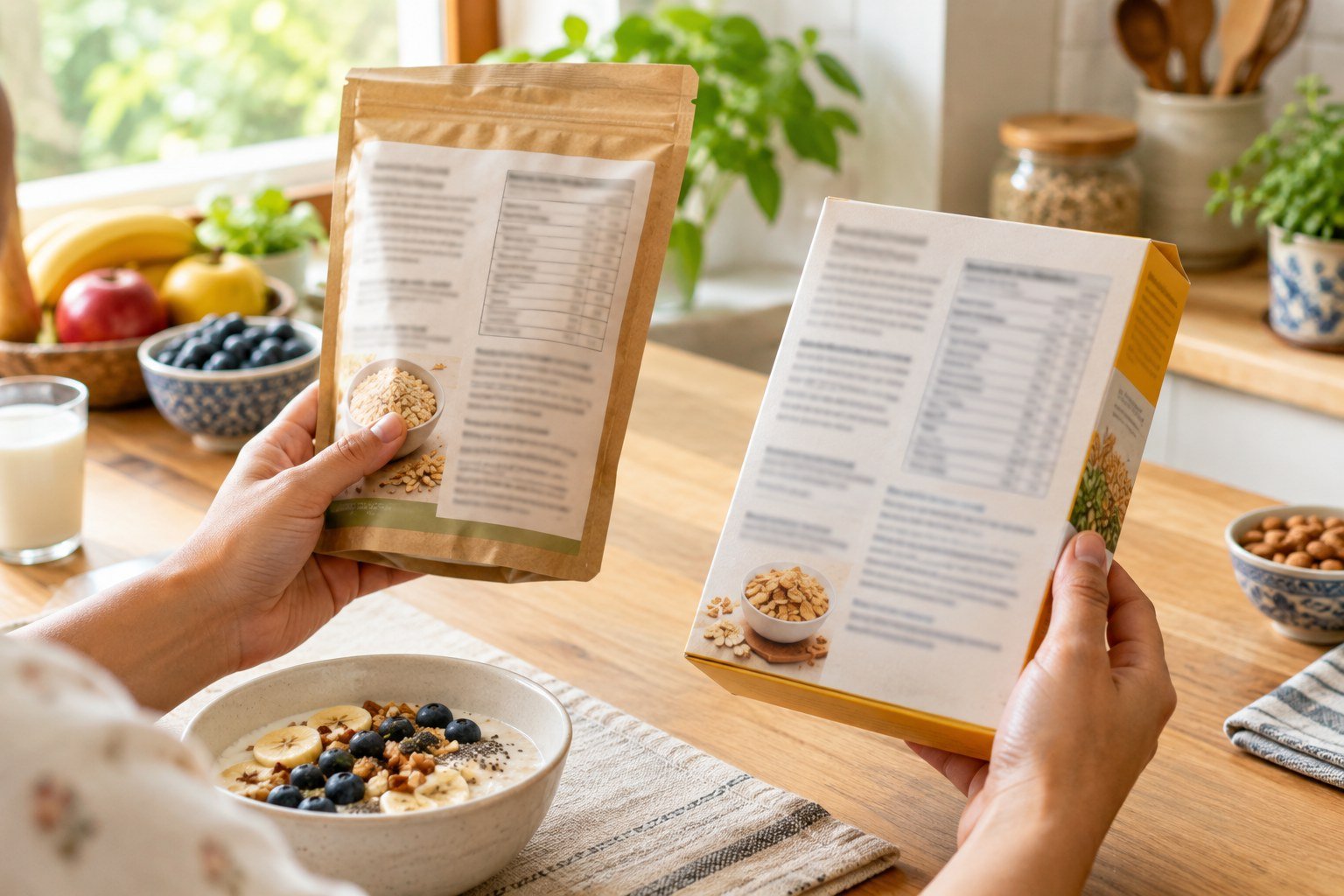
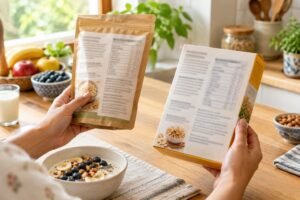
Front-of-pack words such as “natural,” “clean,” “high protein” or “no added sugar” can catch your eye, but they do not tell the whole story. To compare packaged foods in India, turn the pack around and read the ingredient list, nutrition information, allergen statement and date details together.
This is a practical shopping guide, not a list of ingredients to fear. An ingredient’s name alone does not prove that a food is harmful, and a short ingredient list does not automatically make a product nutritious. The aim is to check what is in the product and whether it suits your needs.
1. Start with the ingredient list
For most multi-ingredient packaged foods, ingredients are generally listed in descending order by weight or volume at manufacture under FSSAI labelling rules. That means the first few ingredients make up more of the product than ingredients listed later. Compare similar products using the whole list, not just the front label.
Ingredient names can look technical. Instead of judging an unfamiliar additive by name alone, check its stated function, whether you have a known sensitivity, and the product category. FSSAI regulates food additives and labelling; the presence of an allowed additive is not, by itself, evidence that the food is unsafe.
2. Compare like with like—and check the serving size
Nutrition panels may show values per 100 g or 100 ml, per serving, or both. A brand’s serving size may be smaller than the amount you normally eat. Compare two similar products on the same basis—often per 100 g or 100 ml—then use the serving figure to understand your actual portion. For a snack, drink or cereal, consider how much you realistically consume in one sitting.
3. Read the nutrients that matter for your choice
Look at energy, total sugars, added sugars where declared, saturated fat, trans fat, sodium, protein and fibre. Which numbers matter most depends on the food and your overall diet. For example, when comparing two savoury packaged snacks, sodium and serving size may be useful; when comparing breakfast cereals, sugars and fibre may deserve a closer look. Avoid labelling one number as “good” or “bad” without considering the portion and the rest of your meals.
People managing diabetes, high blood pressure, kidney disease, food allergies or another condition may need more specific advice. Ask a registered dietitian or clinician how to interpret labels for your situation.
4. Treat marketing claims as a prompt to verify
Claims like “source of protein,” “low fat,” “no added sugar” or “high fibre” have defined conditions in FSSAI’s advertising and claims rules. Still, a permitted claim does not mean the product is the best choice for every person or that it is a complete meal. Check the nutrition panel and ingredients to understand what the product contains overall.
“No added sugar” does not necessarily mean sugar-free: sugars may naturally occur in ingredients such as milk or fruit. A claim about one feature should not distract from serving size, sodium, saturated fat or other ingredients relevant to you.
5. Check allergens and dietary fit
Read allergen declarations carefully, including any advisory about possible cross-contact, and check the ingredient list each time you buy. Formulas can change. If you have a diagnosed allergy, do not rely on a previous purchase or a product’s “healthy” positioning. Also confirm that vegetarian, vegan or other dietary claims match your needs and the pack’s required declarations.
6. Look for the date, storage directions and manufacturer details
Check the date marking and the storage instructions, especially for dairy foods, oils, snacks and products bought online. Look for the manufacturer or importer information, batch or lot details, and FSSAI licence information as applicable. A licence number helps identify the food business; it is not a personal recommendation or a guarantee that a product fits your nutrition goals. If a seal is damaged, the pack is swollen or leaking, or the label is unreadable, choose another pack.
7. For online orders, inspect the full label before buying
Before checkout, look for clear photos of both the front and back of the pack, the ingredient list, nutrition panel, allergen details and date information. If essential label details are missing online, ask the seller or manufacturer before purchasing. Check the delivered pack too: product pages and recipes can become outdated when a formula changes.
A quick comparison method
- Choose two similar products, such as two plain dahi options or two breakfast cereals.
- Compare their ingredients and nutrition per 100 g or 100 ml.
- Check the portion you actually eat and the allergens you need to avoid.
- Use the front-of-pack claim as a clue to investigate, not as the final verdict.
- Choose the product that best fits your taste, budget, dietary needs and overall meals.
FSSAI’s Labelling and Display Regulations and amendments set out the rules for packaged-food labels. Its Advertising and Claims Regulations explain conditions for nutrition and health claims. Regulations can change, so refer to FSSAI’s current notices for the latest requirements.
For a product-specific example, see our Whole Truth whey protein label review. A label review can describe what the pack says; it cannot independently verify manufacturing quality or prove that a product is “pure” or free of all risk. For a broader meal perspective, see our practical guide to balanced Indian meals.
Common questions
Does a shorter ingredient list always mean a healthier product?
No. The number of ingredients alone does not show whether a product fits your needs. Compare the ingredients, nutrition panel, portion and dietary requirements together.
Does an FSSAI licence number mean a food is the healthiest option?
No. It helps identify a food business and is part of the regulatory system; it is not a nutrition rating or a personal recommendation.