Healthy Indian Meals for Runners: A Practical Guide
Eating well for everyday running does not require expensive supplements or a strict meal plan. Start with familiar foods and a variety of food groups. Your needs differ with age, health, activity, appetite and climate, so these examples are general ideas—not a personalised sports-nutrition prescription.
Build a balanced Indian meal
ICMR–National Institute of Nutrition’s Dietary Guidelines for Indians (2024) emphasise variety across food groups. A practical everyday plate might include:
- A grain or millet: rice, roti, oats, millets or another familiar staple.
- A protein-rich food: dal, chana, rajma, beans, eggs, fish, chicken, paneer, curd, soy or another food that fits your diet.
- Vegetables and fruit: use what is available and suits you; variety across the week is useful.
- Nuts or seeds: add a portion if you enjoy them and have no relevant allergy.
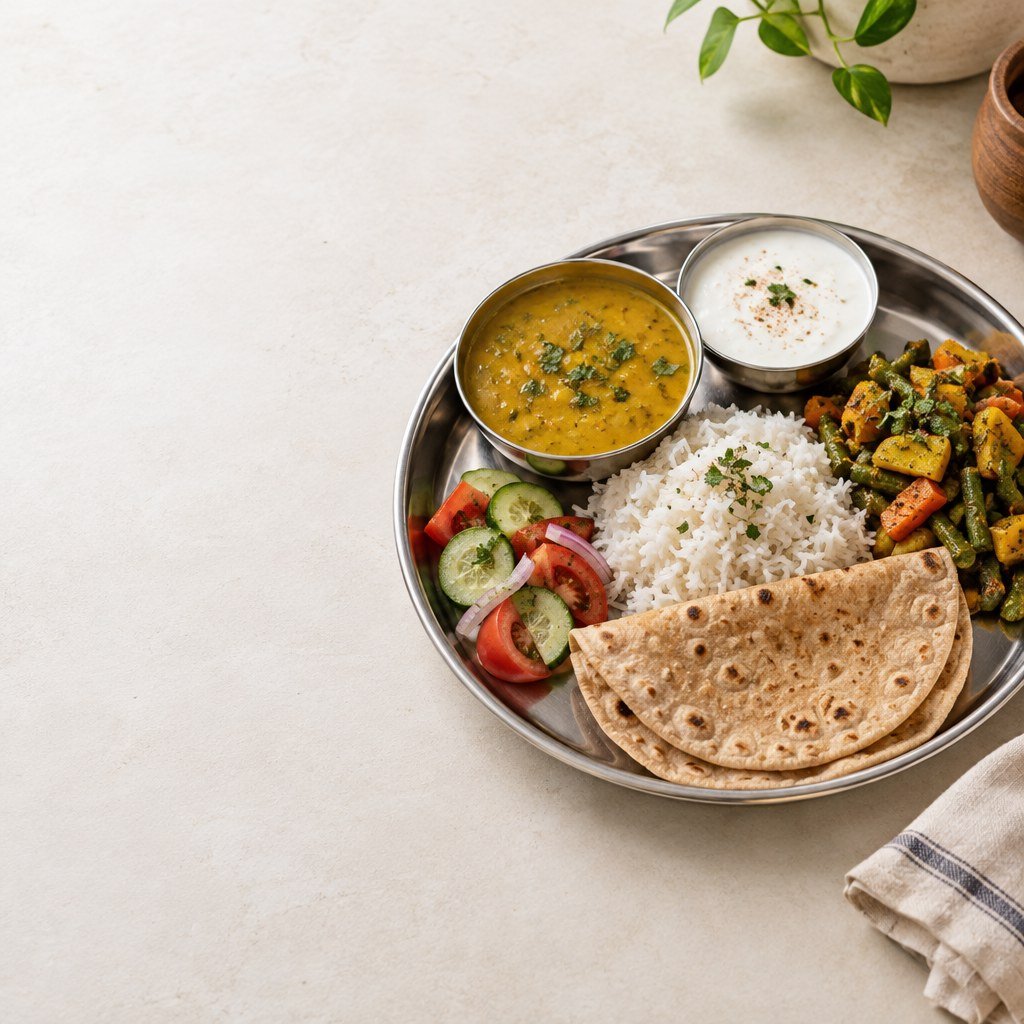
There is no single “superfood” that makes a diet balanced. Familiar combinations such as rice with dal and vegetables, roti with chana and greens, or curd with a meal can work as part of a varied diet.
Food around an easy run
If you feel hungry before an easy session, try a small, familiar snack—such as a banana or a modest portion of poha—and see what feels comfortable. Some people prefer to run after a meal has settled. For a short, easy run, a special sports product may not be necessary. Longer or harder training is more individual; a registered sports dietitian can help with a tailored plan. If you are new to running, see our gentle beginner run–walk plan.
Hydration in warm or humid weather
Keep water available, especially in hot or humid conditions, and plan outdoor runs for cooler hours when heat conditions are unsafe. Fluid needs vary with weather, effort and the individual, so avoid treating one fixed amount as right for everyone. If a clinician has advised you to restrict fluids, follow that advice.
Read packaged-food labels
Front-of-pack words such as “natural”, “pure” or “healthy” do not replace the ingredient list and nutrition panel. Check ingredients, allergen information, serving size, nutrition values, date and storage directions on the pack you are buying. A long ingredient name alone does not prove a food is unsafe, and a short list does not guarantee that it suits everyone. See FSSAI consumer guidance and our Healthy Products guides.
A simple sample day—not a prescription
- Breakfast: poha with vegetables and curd, or another familiar breakfast.
- Lunch: rice or roti with dal or beans and vegetables.
- Snack: fruit, roasted chana, curd or another option that suits you.
- Dinner: a familiar meal with a staple, a protein-rich food and vegetables.
Adjust portions to your hunger, preferences and needs. Food allergies, medical conditions, pregnancy and training demands can change what is appropriate.
Frequently asked questions
Do runners need protein powder?
Not automatically. Whether any supplement is useful depends on the overall diet, training and health. Start by looking at everyday foods; ask a qualified professional for individual advice.
What should I eat before running?
There is no one snack that works for everyone. If you are hungry before an easy run, try a small familiar food and notice how you feel; allow time after a larger meal.
Sources and disclaimer
- ICMR–National Institute of Nutrition: Dietary Guidelines for Indians (2024).
- Food Safety and Standards Authority of India: Consumer guidance notes.
This article is general education, not medical advice or a personalised diet plan. Consult a qualified professional for individual nutrition needs.
2 Comments
Comments are closed.